Jeong (정)
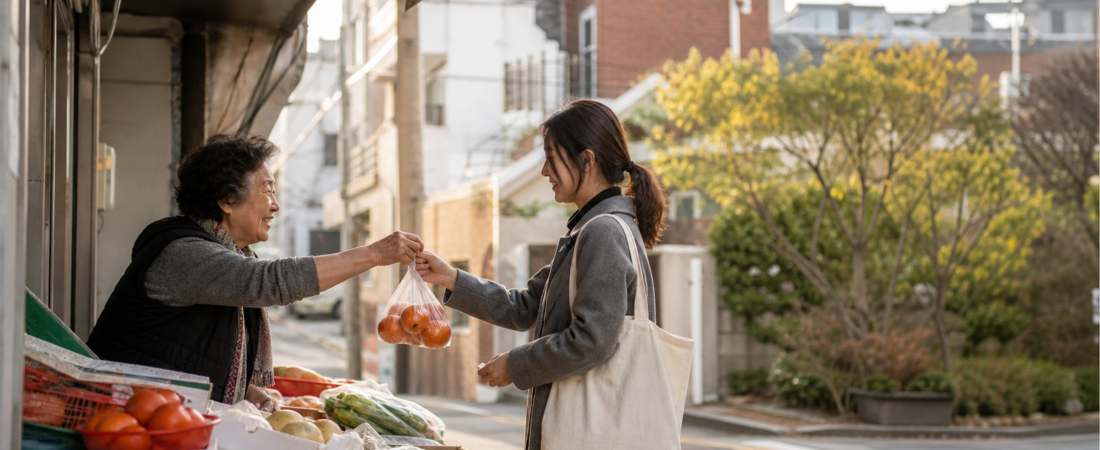
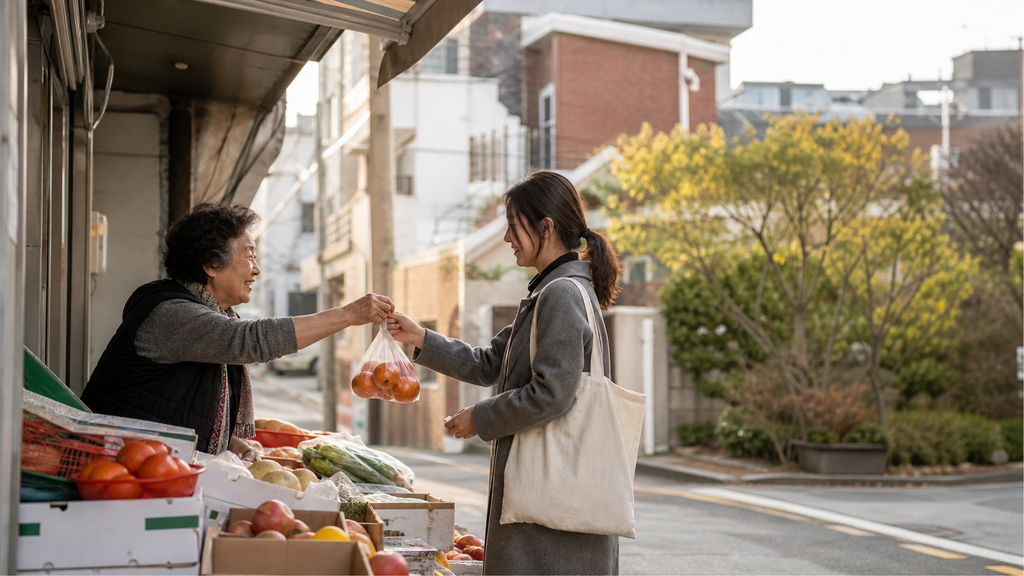
If you have spent time in Korea and noticed a shopkeeper giving a regular customer a little extra, neighbors checking in on one another, or longtime coworkers helping without being asked, you may have seen jeong in action.
Jeong is a gradual feeling of attachment, familiarity, and care that often develops through shared time and repeated experiences. It can exist between people—and even between a person and a place or object. Small acts of kindness may express jeong, but kindness toward a stranger is not automatically jeong; the idea usually carries some sense of connection or growing familiarity.
How Jeong Builds: Time, Familiarity, and Care
Jeong commonly grows through repeated contact, but time alone does not guarantee it. Two coworkers may spend years together without becoming close, while people who quickly recognize a shared experience may feel the beginnings of a bond. Familiarity, emotional engagement, and mutual care all matter.
For example, two Korean travelers who meet abroad may quickly feel 동질감 (dongjilgam, a sense of shared identity) or 동지애 (dongjiae, camaraderie). Those feelings are not exact synonyms for jeong, but they can create the familiarity and care from which jeong begins to grow.
Jeong may also fail to form despite years of contact. The expression 정이 안 간다 (jeongi an ganda), roughly “I can’t warm to them,” describes someone toward whom you do not develop affection or attachment. It shows that time helps, but emotional connection matters too.
Why It Looks Like “Kindness” to Foreigners
Foreign visitors sometimes encounter small acts of care that Koreans associate with jeong: a regular shopkeeper adding something extra, a neighbor offering food, or someone taking time to help with an unfamiliar system.
Context matters. Help offered to a stranger may come from empathy, hospitality, politeness, or personal kindness rather than jeong itself. When familiarity or a sense of shared connection is present, however, these gestures can become an everyday expression of jeong. Experiences vary by person, generation, and region, so the concept should not be used to stereotype every Korean interaction.
정을 나누다 — “Sharing” Jeong
Korean speakers sometimes use 정을 나누다, “to share jeong,” for acts that build or express warmth and connection—sharing food, offering help, or doing a small favor. The phrase emphasizes human connection rather than a formal exchange or obligation.
Two Kinds of Jeong: 고운정 and 미운정
Jeong isn’t always warm on the surface. 고운정 (goun-jeong) is “fond” jeong, built through good memories. 미운정 (miun-jeong) is “spiteful” jeong — you can grow attached to someone even while they annoy you, simply because you’ve genuinely engaged with them, even negatively, over time. Koreans say 미운정 고운정 다 들었다 (“I’ve grown attached through both the hateful and the fond kind”) about a prickly coworker or an aging parent.
This is different from jeong never forming. Miun-jeong still requires real emotional engagement; 정이 안 간다 describes indifference, where no engagement — positive or negative — ever happened.
Jeong vs. Sarang (Love)
정 and 사랑 (sarang, “love”) both describe closeness, but they work differently. Sarang is active and often intense, and can appear quickly — romantic love, a parent’s love for a newborn. Jeong is quieter and doesn’t need strong positive feeling at all; it’s closer to sustained goodwill than passion. A long marriage usually has both: sarang for the romance, jeong for everything accumulated around it.
It’s also worth being careful not to read jeong as generic politeness. A visitor’s instinct is often to file that stranger’s kindness under “Koreans are just polite” — but politeness doesn’t explain why someone would refuse payment or go out of their way for someone they’ll never see again. Jeong does.