Why Age Matters So Much in Korean Social Life
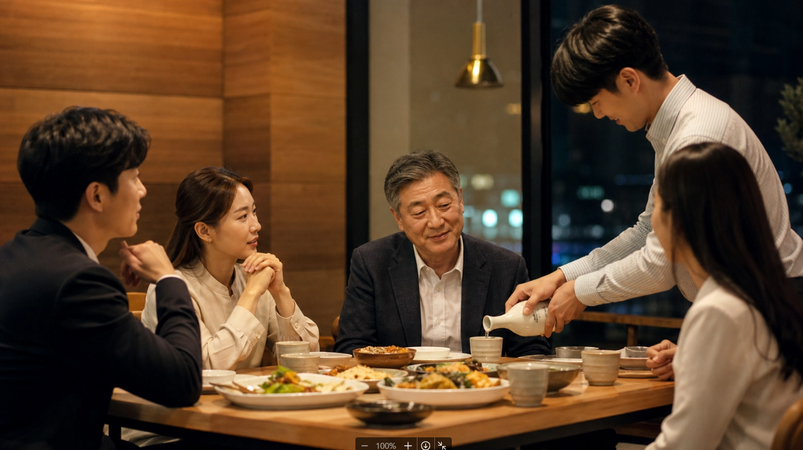
Asking a new acquaintance’s age isn’t a habit Koreans apply to everyone they meet — it shows up mainly in one specific situation: when the relationship is likely to continue, and might grow closer.
If someone is obviously much older, there’s no need to ask anything at all — you simply default to polite or formal speech, no checking required. And if it’s a one-time encounter, there’s no reason to sort out who’s older either. The question mostly comes up between people whose ages are hard to guess just by looking — people close enough in age that neither can safely assume who’s senior. That’s because in Korean, growing closer to someone usually means switching from a name to oppa, unni, noona, or hyung, and choosing the right one requires knowing the actual age difference.
How Age Shapes the Way Koreans Speak
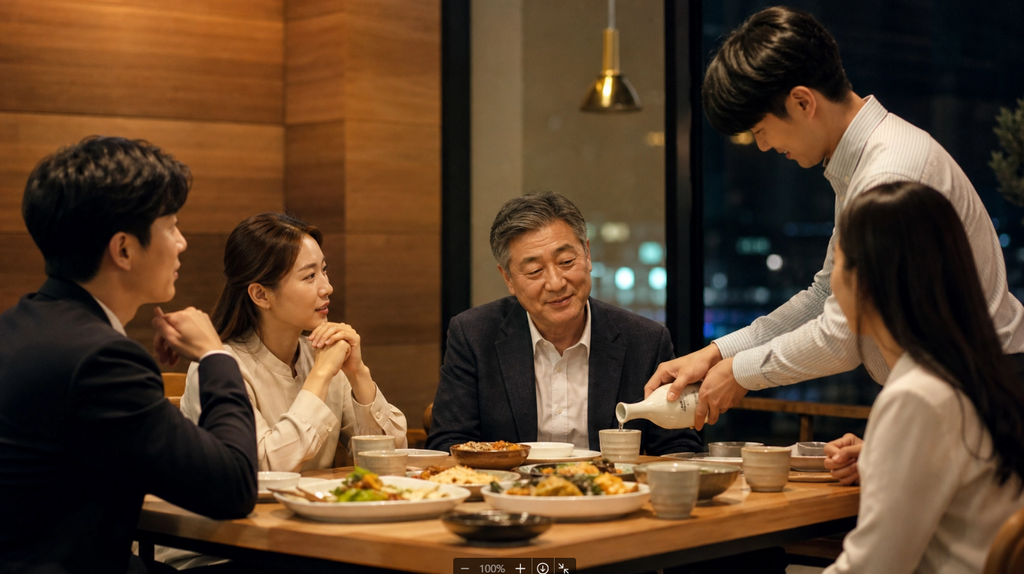
Korean has a grammatical honorific system that changes verb endings, vocabulary, and address terms depending on the relative age and social status of the people speaking. This isn’t a style choice — it’s built into the structure of the language itself.
- Verb endings shift with the level of formality and respect (casual 가/ga, polite 가요/gayo, formal 갑니다/gamnida).
- Address terms split by the speaker’s gender and the listener’s relative age — oppa, hyung, unni, noona, and more.
- Pronoun use is restricted: Koreans generally avoid a direct “you” (너) toward someone older, using a title or name instead.
Because of this, knowing someone’s age isn’t small talk — it’s a necessary step toward speaking to them comfortably and correctly.
When Koreans Actually Ask
The clearest example is two new coworkers who look about the same age and know they’ll be working together going forward. Neither can tell just by looking who’s older, and since they’ll keep interacting, it’s worth settling early whether they’ll stay on formal terms or move toward something closer, like hyung or unni.
New coworker A: 저 91년생이에요. (I was born in ’91.) New coworker B: 아, 저는 93년생이라 형이라고 불러도 될까요? (Oh, I was born in ’93 — can I call you hyung?) New coworker A: 네, 편하게 하세요. (Sure, go ahead.)
That’s how coworkers who expect an ongoing relationship settle their address terms and tone. Compare that to meeting someone who’s clearly a generation older, or a one-off encounter — in either case, nobody bothers asking, because there’s nothing to settle: the speech level is already obvious, or there’s no ongoing relationship for it to matter to.
A Linguistic Legacy of Confucian Social Structure
Korea’s traditional social structure was deeply shaped by Confucian values, which placed weight on hierarchical relationships defined by age, generation, and role — parent and child, teacher and student, elder and younger. Modern Korean society has changed a great deal and isn’t defined solely by those traditional values anymore, but the linguistic habit of setting tone and address terms by age has stayed deeply embedded in everyday life.
Man-Nai and the Age-Counting System
Korea traditionally counted a person as one year old at birth, adding a year every New Year’s Day rather than on an individual birthday — the so-called “Korean age” (세는나이). In 2023, legislation unifying age calculation to 만 나이 (the international, birthday-based system) took effect for administrative and legal purposes starting around mid-2023 (for the exact statute and date, the Ministry of Government Legislation is the authoritative source). Separately from the legal system, though, everyday culture still widely sorts people into social seniority by birth year. The two systems can also differ by a year or two depending on birth month, which is worth watching in precise situations like visas or contracts.
School Year as a Social Marker
Because school entry in Korea is standardized by birth year, classmates almost always share the same age, and that shared age becomes a lasting social bond. Koreans call a close friend from the same school year 동갑 (donggap) — a much more specific term than the broadly age-independent word 친구 (chingu, “friend”). Within a 동갑 relationship, there’s no need for the usual age-based formalities, which makes for an easier, more equal footing.
Same Birth Year, Different School Year: Twins and Early Enrollment
Even people born in the same year don’t always end up perfectly equal — twins are the clearest exception. Even a one-minute gap makes the first-born the hyung or unni, giving families the distinctly Korean arrangement of a “same-age hyung/unni” (동갑내기 형/언니).
Something similar happens with siblings born close together across a calendar-year line — a January baby and an older sibling born the previous December, say, or any pair separated by close to a year. If they landed in the same school grade, the pecking order at home and the peer relationship at school would collide. Since few Korean parents want siblings barely a year apart sitting in the same classroom, they’ll often use early enrollment (especially for children born in January or February) to keep them a grade apart — preserving the natural order of address both at home and in the wider social world.